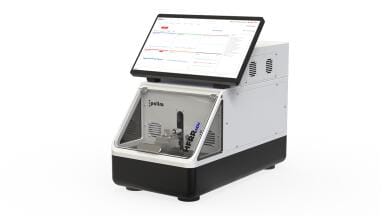
Due to contaminants complexity and the low amount at which pollutants are usually present in environmental samples, their analytical determination can be particularly challenging. Conventional sample preparation methods make use of large solvent volumes and involve intensive sample manipulation that can lead to sample contamination or losses of analytes. Even modern extraction technologies are expensive and offer limited productivity. To overcome these disadvantages, Milestone developed a rapid, efficient and environmental-friendly procedure.
In this eLearning session, Milestone will discuss about microwave-assisted-extraction (MAE) technique that, over the last years, has been successfully applied for the extraction of semivolatile organic compounds, pesticides, herbicides, substituted phenols, PCBs and PCDDs/PCDFs from solid matrices, in accordance to US EPA 3546. We will compare the performance and the throughput of MAE to that from classical extractions (sonication and Soxhlet extraction) and recent techniques (supercritical fluid extraction and accelerated solvent extraction).
This eLearning session will provide insight information on how to effectively eliminates common challenges in organic pollutants determination from environmental matrices with microwave solvent extraction.
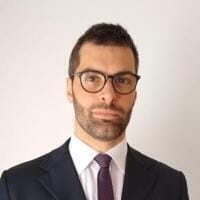
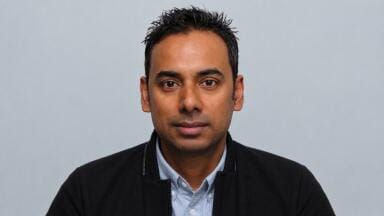
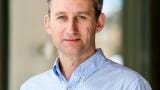
Dr. Roberto Boschini develops new methods and applications, helping customers making the best use of our technology. Currently, he focuses on lab tests, application researches and customer application support for performing extraction and mercury determination. He independently performs researches and develops new or modifies methods and techniques when standard ones are inadequate. Before joining Milestone, Dr. Roberto Boschini has been working for 10 years in two different environmental laboratories serving global customers. During this period, he acquired excellent an in-depth knowledge of many laboratory techniques and equipments. His instrumentation experience includes ICP, UV-Vis spectroscopy, GC-MS/MS, LC-MS/MS, FT-IR, SEM, titration and ion chromatography. Roberto has a high school diploma in Chemistry and a degree in Environmental Science at University of Milan-Bicocca.
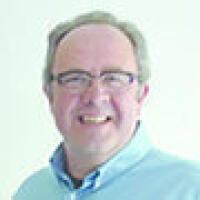
Tom has 35 years of experience in the petroleum industry, specialising in the delivery of forensic and problem solving /method development capabilities for BP Fuels and Lubricants businesses globally. He was also a member of the BP Science Council representing Analytical Science and led a BP wide Analytical Science network. Tom has published over 30 citable papers, 4 book chapters and has given over 60 presentations at conferences. He is a past Vice President of the Royal Society of Chemistry (RSC) Analytical Division and a past Chairman of the RSC Separation Science Group. In addition, Tom is a recipient of the Silver Jubilee Medal by the Chromatographic Society and a technical achievement award by the Energy Institute.
IET 36.5 Sept/Oct 2026

 Product directory












.jpg)
.jpg)
.jpg)
.jpg)