Portable & field testing
Published over 10 years ago. See the latest and most current information on Portable & field testing.
FLIR Systems announces a new article that describes the development of an innovative robot system for remote detection and localisation of gas leaks in large industrial facilities.
Developed as part of the German technology program AUTONOMIK, a consortium of nine companies and research institutes, the RoboGasInspector provides a safer, more efficient and more reliable detection solution for gas leaks in industrial facilities.
Operators of industrial facilities including chemical plants, refineries and gas compression stations place great importance on the safety of their staff and their production facilities. Exercising the utmost care wherever toxic or explosive gases are used or manufactured is absolutely essential. Traditionally this has required preventive inspection programs where personnel perform time consuming routine inspection procedures on a daily basis.
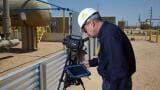
Incorporating a FLIR GF320 optical gas imaging camera, the RoboGasInspector is able to perform inspection tasks in industrial facilities without having to access hazardous areas directly - and without requiring any human presence. The robotic system can be used for routine inspection of facilities or for targeted inspection of specific parts of plants. The independent mobility of the system was achieved using various navigation sensors, while maintaining the option of manual intervention via remote control at any time. The RoboGasInspector is also equipped with video and optical gas telemetry, which enables it to inspect system parts that were previously difficult to inspect due to restricted accessibility.
The RoboGasInspector consists of three modules: a chain-driven mobile platform, a navigation module and an inspection module. The chain-driven platform is equipped with an electric drive and conventional batteries.
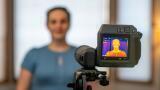
The inspection module combines various metrological instruments on a pan-tilt unit, including a Remote Methane Leak Detector and a FLIR GF320 thermal imaging camera to visualise the gases. To ensure that the RoboGasInspector does not itself pose a risk, it is also equipped with a built-in gas sensor that shuts down the entire system from 10% of the lower explosion limit (LEL) onwards in order to prevent possible danger to a flammable atmosphere.
Optical imaging with thermal imaging cameras such as the FLIR GF320 offers numerous advantages, as larger areas can be covered significantly faster than with conventional methods and detection also succeeds in sectors that are difficult to access with contact measuring devices. Leaks are shown as plumes of smoke in the thermal image. When a leak is found from a safe distance with the GF camera, a TVA can be used to quantify the gas concentration.
IET 36.2 Mar/Apr 2026


 Product directory





.jpg)