Gas detection
Published over 15 years ago. See the latest and most current information on Gas detection.
In today’s gas detection market, there are a number of choices that an occupational health and safety professional faces each time he/she decides to purchase a single or multi-gas monitor. With companies downsizing, industrial hygienists and safety officers are facing this dilemma more often. There are many different things to look for when purchasing gas detection equipment. For instance, the OEHS professional must consider whether the monitor is going to be used as a personal monitor to protect workers in the field, or used for industrial hygiene and monitoring purposes.
As a buyer of portable gas detection equipment, the first thing to consider is the application in which the monitor is going to be used. Is the monitor going to be worn continuously throughout the day to provide personal safety monitoring, or will it be used intermittently to gather samples, confined space entry, or other industrial hygiene applications? For each of these situations, specific features are desired in the gas monitoring equipment.
Personal Safety Gas Monitor Considerations
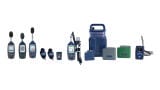
When selecting a personal safety monitor, one should look for a single or multi-gas monitor that can be worn continuously throughout a work shift. This monitor will be worn between 8-12 hours a day either on the user’s belt, over-alls, or hardhat. For this reason size and weight of the instrument are key features. Since each person is different, a variety of clips and carrying cases should be readily available so the user can attach the instrument to their clothing, as they desire.
Personal safety monitors should have a full feature set of alarms including low, high, TWA, STEL and low battery warnings to alert the user of any unsafe condition. When the instrument goes into alarm, loud audible, bright visual, and internal vibrating alarms alert the user that there is a hazardous condition.
IET 36.2 Mar/Apr 2026


 Product directory








.jpg)