Air monitoring
Published over 15 years ago. See the latest and most current information on Air monitoring.
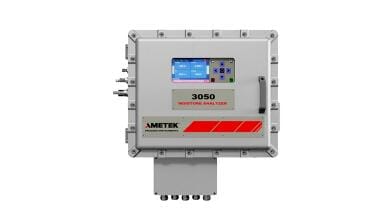
Industrial process operator that have environmental permit, should be aware of the requirement to ensure that any continuous emissions monitoring systems (CEMs) that are installed at emission points to air are functioning correctly. In 2004 BS EN 14181 was introduced to provide formal quality assurance procedures to be applied to CEMs on all processes falling under the Waste Incineration (WID) and Large Combustion Plant (LCPD) Directives.
The principles of BS EN 14181 are relatively simple in that suitable monitoring equipment is installed; it is set up correctly, calibrated effectively and monitored over time to ensure the derived calibration function maintains its validity and suitable checks are made. The outcome of this is to increase both the accuracy and precision of the installed instrument, thus increasing the confidence in the results it reports and ultimately reducing the potential requirement for additional specialist monitoring to verify the performance of the process.
Despite this relatively simple overview the processes involved in the execution of BS EN 14181 are quite complex and vary depending on the installation, the instrumentation and the industrial process operator. Over the past few years, stack emissions monitoring organisations performing EN 14181 work have been doing so outside the scope of ISO/IEC 17025 accreditation, and both industry and the Environment Agency have seen very variable quality in the way this work has been implemented, resulting in some extreme cases whereby a perfectly functional CEM has been condemned as malfunctioning due to basic misunderstandings of both the EN 14181 processes and the installation that was being monitored.
IET 36.2 Mar/Apr 2026


 Product directory













.jpg)