Analytical Technology (ATi) has introduced its ground-breaking Q45N Dissolved Ammonia Monitor, a completely new approach to on-line monitoring of ammonia which is simpler, cheaper and more stable than conventional monitoring equipment. Continuous monitoring of ammonia in water and wastewater streams is becoming increasingly important for plant operations and process control. This new ammonia system represents a major step forward in providing users with a monitor which is both simple to operate and economical to purchase.
It is applicable to both drinking water, for control of chloramination processes and to waster water for discharge consent applications or for the control of ammonia removal processes. It uses very low cost reagents and has the lowest running costs of any monitor.
The technology does not suffer from any of the problems associated with ion selective electrodes or colorimetry.
Traditional ammonia monitors are expensive, complex and labour- ntensive instruments which use automated versions of ammonia selective ion electrodes methods better suited to laboratory measurements. The Q45N Dissolved Ammonia Monitor from ATi overcomes these problems by using reaction chemistry to convert ammonia in a solution to a stable monochloramine compound, equivalent in concentration to the original ammonia level. The chloramine concentration is then measured with a unique amperometric sensor that responds linearly to chloramines while eliminating interface from excess free chlorine in solution.
ATi’s Q45N monitoring package for dissolved ammonia provides the measurement stability needed to avoid complicated automatic calibration systems. Unlike typical ammonia ISE sensors, which are subject to significant drift problems, the amperometric sensor provides excellent repeatability over long periods of time. As the measurement utilises chloramine conversion for measurement, the sample is inherently subjected to biocidal conditions, eliminating long term biofouling on the sensor.
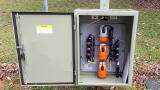
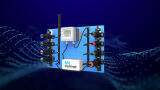
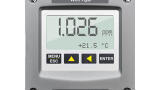
The Q45N system consists of a wall mounted chemistry system and an electronic display and alarm package. The chemistry system contains the necessary metering pumps to provide chemical addition to the sample and delivery of the sample to the sensing element. The electronic display and alarm package provides the user interface to the system. Ammonia concentration is displayed on a large format LCD display with secondary display for other operating variables.
See our Website




 Product directory










.jpg)