Water/wastewater
Published over 15 years ago. See the latest and most current information on Water/wastewater.
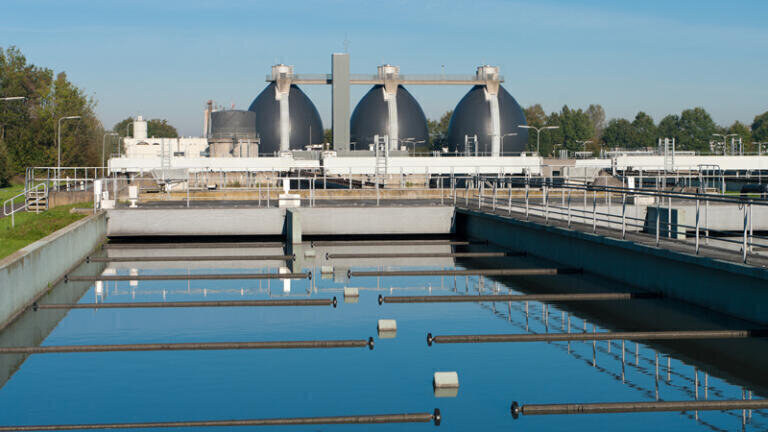
Greater Wellington Water (New Zealand) operates two surface water treatment plants. These are the 140ML/d Te Marua WTP and the 60ML/d Wainuiomata WTP. Both of these sites treat water from heavily forested upland catchments. The source water is very low in turbidity and has highly variable NOM content. The NOM is predominantly humic and fulvic acids with a high THM and HAA formation potential. The average normalised formation potentials for the plants are:
Total THM formation potential = 75.3 μg/mg C
HAA5 formation potential = 100.9 μg/mg C
Each of the plants has 4 s::can spectro::lysers installed for source selection, coagulation control (Com::pass), plant monitoring and chlorine dose setpoint control.
Despite the relatively high levels of both total THMS and HAA5s in the source waters the concentrations measured in the distribution system are always <20μg/L and <50μg/L for total THMs and HAA5s respectively.
On-line measurements of TTHM formation potential and HAA5 formation potential are shown for the Te Marua WTP inlet and combined filtered water in the following graphs.
IET 36.2 Mar/Apr 2026


 Product directory






.jpg)



.jpg)